Schwalbe G-One Allround Review: The Best All-Round Gravel Tire for Bikepacking?
- Tested
- 40mm TLR, MicroSkin, Addix
- Logged
- 4,200 km — France, Spain, Portugal, Germany, Austria
Quick Verdict
The Schwalbe G-One Allround is the best default gravel tire for mixed-terrain bikepacking. It handles packed gravel, tarmac, and loaded touring with consistent composure — but it's not the right choice for technical or loose conditions.
What Is the Schwalbe G-One Allround?
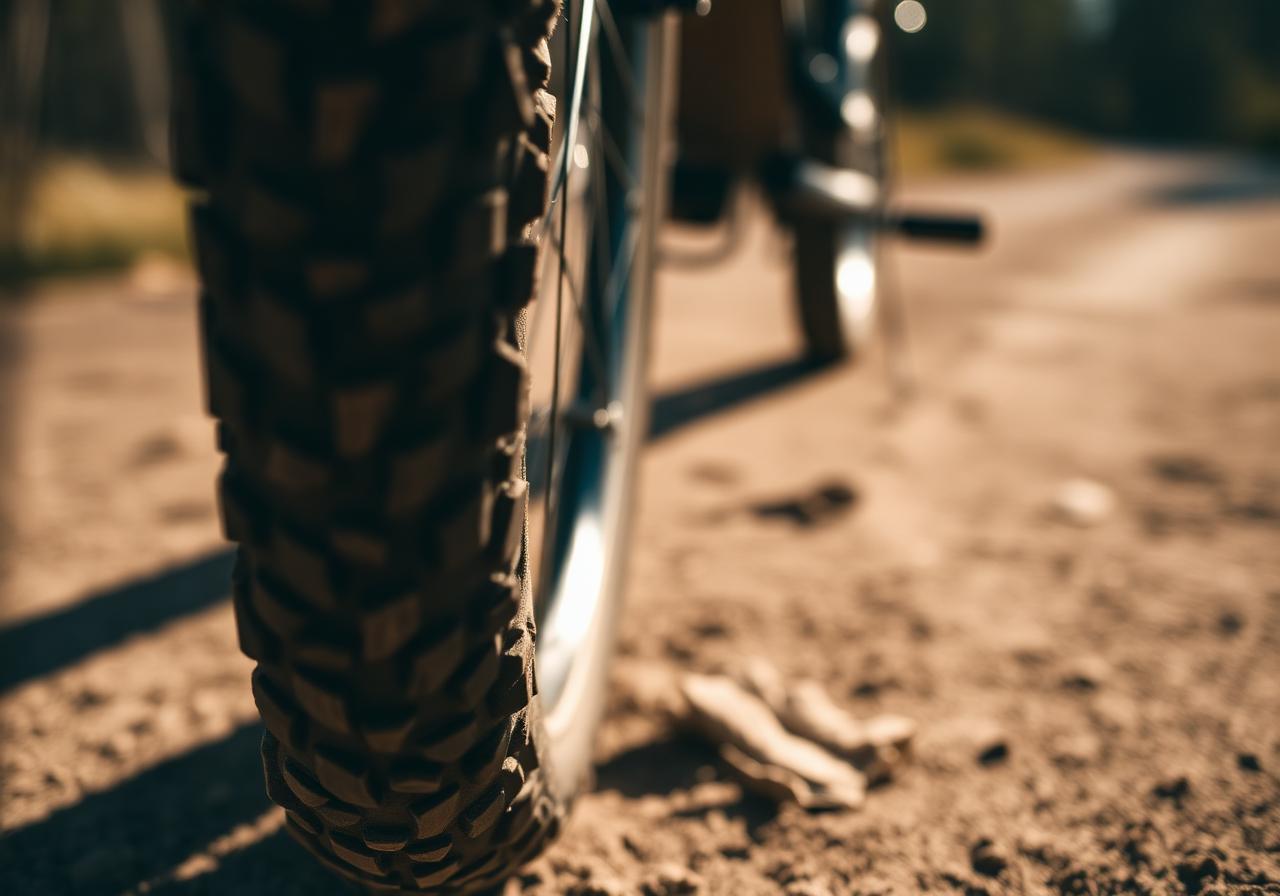
The Schwalbe G-One Allround is a tubeless-ready gravel tire designed for mixed terrain — part of Schwalbe's broader G-One family, which ranges from the speed-focused G-One Speed to the aggressive G-One Ultrabite. The Allround sits in the middle: a closely spaced centre tread that transitions to more pronounced shoulder knobs, built to handle both tarmac and gravel without demanding a terrain commitment upfront.
It's available in 35mm, 40mm, and 45mm widths, in both folding and tubeless-ready (TLR) versions. The version tested here is the 40mm TLR with MicroSkin casing and Addix compound — the configuration I recommend for most riders.
How I Tested the G-One Allround
I've put 4,200 km on this tire across five countries — France, Spain, Portugal, Germany, and Austria — over multiple trips spanning two years. Conditions included alpine passes, Iberian gravel tracks, Atlantic coast roads, Portuguese cobblestones, and Pyrenean doubletrack. I've run it both unloaded and fully loaded with bikepacking gear.
I also run a comparison reference: every terrain section was ridden before or after on at least one other tire (Teravail Rampart, WTB Resolute, Continental Terra Trail) to ensure the observations are relative, not just descriptive.
On Tarmac and Hard Pack
The G-One Allround is not a fast tire on tarmac. On long paved climbs or into headwinds, you'll feel the rolling resistance — it's noticeably slower than the Schwalbe G-One Speed or Continental Terra Speed. What it does deliver is predictable, stable tracking: no squirm, no wander, confident braking. On routes that mix 30–40% tarmac with gravel, that's a reasonable trade.
On hardpack and compact gravel, the closely spaced centre tread rolls efficiently and the tire feels planted. It accelerates quickly from this surface and holds speed well.
On Gravel and Dirt Roads
This is where the G-One Allround earns its name. The tread transitions smoothly from packed to loose surface — the kind of unpredictable mix you encounter every few minutes on a real gravel route. Shoulder knobs engage when you lean into corners without feeling vague or grabby. In wet conditions on limestone and shale, it maintained grip confidently.
What makes it good here isn't peak grip — it's predictability. The tire communicates clearly as conditions change, which matters more on long days than raw traction numbers.
On Technical and Loose Terrain
Here I'll be honest: the G-One Allround reaches its limits on genuinely loose or rooty terrain. The shoulder knobs are not deep enough to provide real confidence on wet singletrack, sandy switchbacks, or steep descents with loose surface. If more than two hours of your daily riding involves technical terrain, you'll want the Schwalbe G-One Ultrabite, WTB Resolute, or Maxxis Rambler instead.
Loaded Touring Performance
Under full bikepacking load — handlebar roll, frame bag, rear rack — the G-One Allround stays composed in a way that lighter-casing tires don't. The MicroSkin casing is stiff enough to handle extra weight without sidewall fold or vagueness. Over three weeks of loaded riding in the Pyrenees, I never once questioned the tire's integrity. That's the real test.
"It's the tire for riders who want to think about their route, not their rubber."
Schwalbe G-One Allround Durability
Over 4,200 km, I had one puncture that sealant couldn't seal — a piece of wire, which defeats most tires. The tread wore gradually and evenly. I retired the rear at approximately 3,000 km due to centre tread wear; the front was still usable at trip end.
The MicroSkin casing showed no cracking or sidewall delamination. Tubeless setup was straightforward on DT Swiss rims — first-try bead seat with a floor pump, no compressor needed — and pressure loss between rides was minimal (1–2 psi over a week).
If you're new to tubeless, our guide Tubeless, Without the Drama covers setup step by step.
Schwalbe G-One Allround vs the Competition
| Tire | Best for | vs G-One Allround |
|---|---|---|
| Teravail Sparwood 38mm | Packed gravel, road-heavy routes | Faster rolling, less grip in mud |
| WTB Resolute 42mm | Loose and variable terrain | More tread and grip, heavier |
| Panaracer GravelKing SK 43mm | General gravel riding | Similar feel, slightly less durable |
| Continental Terra Trail 40mm | Wet or rooty technical terrain | Better in tech sections, harsher ride |
| Maxxis Rambler 40mm | Technical and loose conditions | More aggressive, more tread, slower on tarmac |
| Schwalbe G-One Ultrabite 45mm | Off-road and muddy terrain | Significantly more grip, much slower on roads |
The G-One Allround wins on terrain range. None of the alternatives handles as wide a spread of surfaces without asking you to make a trade. That's the whole argument.
Schwalbe G-One Allround Specs (40mm TLR)
| Width (measured on DT Swiss G540) | 40.5mm |
| Weight | 522g (manufacturer), 518g (our scale) |
| Casing | MicroSkin TLE |
| Compound | Addix |
| Tubeless | Yes — tubeless-ready, no conversion kit needed |
| Available widths | 35mm, 40mm, 45mm |
| Price | ~€55–70 depending on version |
Verdict
The Schwalbe G-One Allround is the tire I recommend when someone asks what to put on their bike before a long trip across unfamiliar terrain. Not because it excels at any one thing — it doesn't — but because it handles the widest range of conditions without drama, sets up tubeless easily, and lasts a reasonable distance under load.
- Best for
- Mixed-terrain bikepacking, multi-country tours, riders who want one tire for everything
- Skip if
- Your route is heavily technical, loose, or wet — or you prioritise tarmac speed above all
- Price
- ~€55–70 depending on version
- Available in
- 35mm, 40mm, 45mm (TLR and folding)
FAQ: Schwalbe G-One Allround
Is the Schwalbe G-One Allround tubeless?
Yes. The TLR (Tubeless Ready) version seats easily with a floor pump and holds air reliably. Schwalbe recommends 40–60ml of sealant. The folding (non-TLR) version is not tubeless-ready.
What pressure should I run the G-One Allround at?
For a 75–85kg rider on a loaded bike, 2.2–2.5 bar (32–36 psi) in the rear and 1.8–2.2 bar (26–32 psi) in the front is a good starting point on gravel. Go lower on dirt; higher on tarmac. Never exceed 4.5 bar on hookless rims.
How long does the G-One Allround last?
In my experience, around 2,500–3,000 km on the rear before the centre tread wears through, and 4,000+ km on the front. Real-world mileage varies significantly based on terrain and rider weight.
Is the Schwalbe G-One Allround good for bikepacking?
Yes — it's one of the best choices for loaded touring. The MicroSkin casing holds its shape under weight, and the tread handles the terrain mix most bikepacking routes involve.
What's the difference between the G-One Allround and the G-One Speed?
The G-One Speed has a near-slick tread optimised for tarmac and hardpack, with significantly lower rolling resistance. The Allround has a more pronounced tread pattern that handles loose and mixed terrain better. For road-heavy routes, the Speed; for genuine mixed terrain, the Allround.
What's the difference between the G-One Allround and the G-One Ultrabite?
The Ultrabite has taller, more widely spaced knobs and is designed for loose, muddy, and technical terrain. It's slower on tarmac and hardpack. The Allround is faster and more versatile; the Ultrabite grips harder in bad conditions.
Does the G-One Allround work on hookless rims?
Yes, confirmed compatible with ETRTO-standard hookless rims up to 73 psi. Check Schwalbe's compatibility list for your specific rim model.
Author
Guillaume Faure
Guillaume has ridden gravel routes across 12 European countries since 2018. He founded Gravel Tread to publish the kind of tire reviews he wished existed when he was choosing his first set.
Related Reviews