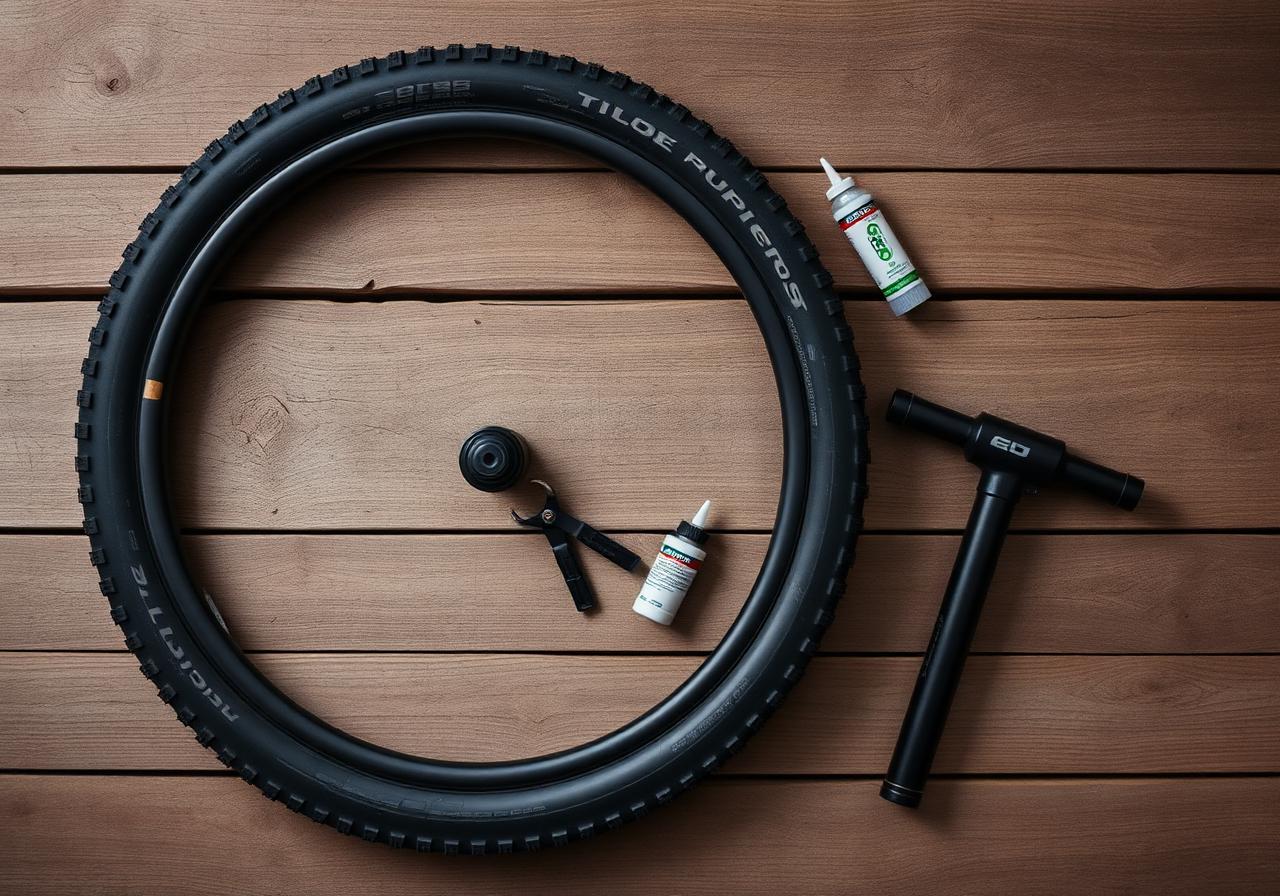
How to Set Up Tubeless Gravel Bike Tires (Without a Compressor)
The Short Answer
Gravel tubeless setup takes about 20 minutes, requires no compressor, and the process almost always works if you do two things right — tape the rim properly and let it cure before mounting the tire.
What Is a Tubeless Gravel Setup?
A tubeless gravel tire system replaces the inner tube with an airtight rim-and-tire seal maintained by liquid sealant. When a thorn or sharp object punctures the tire, the sealant — typically latex-based — flows to the hole and seals it within seconds, usually without the rider needing to stop.
The main benefits for gravel riding are:
- Fewer flats — small punctures (up to ~6mm) seal automatically.
- Lower pressure — without the risk of pinch flats, you can run 5–10 psi lower than with a tube, improving grip and comfort on loose terrain.
- Less weight — removing a 100–130g inner tube reduces rotating mass.
The tradeoff is a setup process that requires care and compatible components. This guide covers both.
What You Need for Gravel Tubeless Setup
Before buying anything, confirm all four components are compatible:
- Tubeless-ready rim — Look for "TLR" or "Tubeless Ready" stamped on the rim sidewall or listed in the manufacturer specs. Rims not designed for tubeless will not seal reliably regardless of tape or sealant.
- Tubeless-ready tire — "Tubeless Ready" or "TLR" markings indicate the bead and casing are designed to work without a tube. Most premium gravel tires — including the Schwalbe G-One Allround, Teravail Rampart, WTB Resolute, and Panaracer GravelKing — are tubeless-ready. Some cheaper tires marked "tubeless compatible" are not.
- Tubeless valves with removable cores — The removable core is essential: you'll use a valve core tool to remove it when injecting sealant. Brass or aluminium, Presta valve, length matched to your rim depth.
- Rim tape — Tubeless-specific tape, 2–3mm wider than your internal rim bed width. Measure your rim bed before buying. Standard tape widths for gravel rims are 21mm–27mm.
- Sealant — 60–90ml per tire for initial setup. See sealant comparison below.
- Tools — floor pump, valve core tool, syringe or sealant bottle with injector nozzle, isopropyl alcohol.
Step-by-Step: Gravel Tubeless Setup Without a Compressor
- 01
Tape the Rim (Allow 1 Hour to Cure)
This is the step most failed setups have in common: rushed or poorly applied tape.
Remove any old tape and clean the entire rim bed with isopropyl alcohol. Let it dry completely — oil or moisture will prevent the tape from bonding.
Apply tape with firm, consistent tension, starting opposite the valve hole. Press the tape into the edges of the rim bed as you go. Overlap your starting point by at least 5cm.
Run your thumb firmly along the tape three full times around, paying extra attention to the edges where leaks start.
Pierce the valve hole with a sharp awl or valve tip — rotate gently to create a clean round hole. Insert the valve and tighten the locknut finger-tight, then a quarter turn more.
Wait 1 hour before mounting the tire. This is non-negotiable. Rushing the cure time is the most common reason setups fail.
One layer of tape is usually sufficient on a quality tubeless rim. Add a second layer only if the rim has deep spoke holes or if your first layer has any visible wrinkles or gaps.
- 02
Mount the Tire Dry First
Mount the tire without sealant to confirm compatibility and check for any fit issues before making a mess.
Check the tire's rotation arrow on the sidewall — mount with the arrow pointing forward (in the direction of wheel rotation).
Seat both beads by hand if possible. Work around the tire keeping the bead in the deepest channel of the rim (the centre well) — this gives you slack to work with. The last section near the valve is always tightest.
Do not use metal tire levers on tubeless setups — they risk damaging the bead. Plastic levers are acceptable for the final section if needed.
Check that the moulded bead line on the sidewall is equidistant from the rim lip all the way around, on both sides.
- 03
Seat the Bead With a Floor Pump
Inflate the tire with a standard floor pump. You'll hear the beads pop into the rim seat — sometimes one side at a time, sometimes both together. Inflate to the top of the tire's recommended pressure range (usually 50–65 psi / 3.5–4.5 bar) for initial seating only.
If the bead won't seat with a floor pump: apply a thin layer of soapy water to both beads — this lubricates and helps the tire slide into position. Remove the valve core with your core tool — removing it allows more air volume through the valve per pump stroke, which is often enough to seat a reluctant bead.
If still no success: a tubeless inflator (Lezyne Blast, Bontrager Flash Charger, Topeak Joeblow Booster) stores a pressurised chamber and releases it in one burst — this solves most remaining cases. A CO₂ cartridge works as a last resort but can degrade some sealants — use sparingly.
If none of these work, the rim and tire combination may not be compatible. This is a components issue, not a technique issue.
- 04
Add Sealant
Two methods — both work, one is cleaner.
Method A (via valve — recommended): Deflate the tire slightly, remove the valve core with the core tool, inject sealant through the valve using a syringe or injector bottle, replace the valve core, reinflate.
Method B (break the bead): Deflate completely, unseat a short section of the bead, pour sealant in directly, reseat the bead by hand, reinflate.
- 05
Distribute and Check
With sealant inside, rotate the wheel slowly to coat the inner casing. Tip the wheel from side to side to get sealant onto both sidewalls. Let it sit for two minutes before moving.
Go for a ride — even 15 minutes around the block. Movement is the most effective way to distribute sealant and seal any micro-pores in the casing.
When you return, inspect the tire for any persistent weeping. A small amount of dried sealant at the bead or valve is normal. A wet patch suggests a leak that needs attention.
How much sealant to use:
| Tire width | Terrain | Sealant amount |
|---|---|---|
| 35mm | Road / hardpack | 45–60ml |
| 40mm | Mixed gravel | 60–75ml |
| 45mm | Off-road / rough | 75–90ml |
| Any width | Bikepacking / touring | Add 15ml extra |
Which Sealant Is Best for Gravel Tubeless?
| Sealant | Best for | Lifespan | Notes |
|---|---|---|---|
| Orange Seal | Warm / dry conditions | 2–3 months | Seals fast, dries out quicker than others |
| Muc-Off | Cold / wet conditions | 3–4 months | Performs well in low temperatures |
| Stan's NoTubes | General use | 2–3 months | Shop standard, leaves residue over time |
| Effetto Mariposa Caffélatex | Racing / performance | 2 months | Fast-sealing, lower volume needed |
All sealants dry out. Check yours every 2–3 months by shaking the wheel and listening for liquid movement. No sound means it's time to top up. A dry tubeless setup is just a clincher waiting to go flat.
What to Do When Things Go Wrong on the Road
- Small puncture, tire losing air slowly: Keep riding. Sealant typically seals a thorn hole within 20–30 seconds. If the tire stays soft, stop and orient the puncture downward so sealant pools there, then pump back up.
- Larger puncture, sealant not holding: Use a tyre plug (Dynaplug, Stan's Dart, Quarq TyreWiz). Insert through the hole, trim flush, reinflate. This handles most punctures up to approximately 8–10mm.
- Tire won't hold air at all: Mount a tube. Remove the valve core, drain remaining sealant (messy but necessary), insert the tube, inflate. You've lost the tubeless setup for the day but you're still moving.
- Bead burp on a hard corner: This happens when you run pressure below the safe minimum for your weight and load. Reinflate on the roadside, note your minimum pressure, and don't go lower.
- Rim leaking at the tape: Usually means tape has lifted or was applied incorrectly. A field fix with a small piece of fresh tape can help; a full retape is the proper fix.
Minimum Tubeless Kit to Carry on Every Ride
- Mini pump (slower than CO₂ but unlimited).
- 2 × CO₂ cartridges (for emergencies only — some damage sealant).
- 4–6 tire plugs (Dynaplug or similar).
- 1 spare inner tube (for failures that plugs can't fix).
- Valve core tool.
- 50ml sealant top-up bottle.
For multi-day bikepacking routes, also carry a second tube and a short length of tubeless tape.
FAQ: Gravel Tubeless Setup
Do I need a compressor to set up tubeless gravel tires?
No. Most gravel tubeless setups seat with a standard floor pump because gravel tires have higher volume than road tires, requiring less pressure to seat the bead. Remove the valve core first to maximise air flow. A tubeless inflator (not a compressor) handles the rare cases where a floor pump isn't enough.
How much sealant do I need for a gravel tire?
60–75ml per tire is sufficient for most 40mm gravel setups. Use 75–90ml for larger 45mm tires, bikepacking routes, or rough terrain where puncture risk is higher. Re-check sealant levels every 2–3 months.
How often should I replace tubeless sealant?
Every 2–3 months in normal conditions, or before any major trip. Sealant that has dried out stops working entirely. Shake the wheel — if you don't hear liquid, it's time to top up.
Can I convert any gravel tire to tubeless?
No. The tire must be marked tubeless-ready (TLR). Non-tubeless tires have casings too porous to hold air with sealant, and beads not designed to seat airtight on a tubeless rim. Attempting to convert a non-TLR tire is unreliable and can be dangerous on hookless rims.
Why won't my tubeless tire seat?
The most common causes are: tape that hasn't cured (wait 1 hour minimum), a valve that isn't fully sealed, not enough air volume from the pump (remove the valve core to help), or an incompatible rim-and-tire combination. Try soapy water on the beads and removing the valve core before escalating to an inflator.
Is tubeless worth it for gravel riding?
Yes — especially for bikepacking and remote riding. The ability to seal small punctures automatically, combined with the option to run 5–10 psi lower than with a tube, makes a measurable difference in both reliability and comfort on rough terrain. The setup takes 20 minutes; the maintenance is checking sealant every few months.
What tire should I pair with a tubeless setup?
For mixed-terrain bikepacking, the Schwalbe G-One Allround (40mm TLR) is our most-tested recommendation. See the full G-One Allround review for terrain-by-terrain breakdown.